
The prison as a mirror of society
Restorative justice facing a selective and unequal system

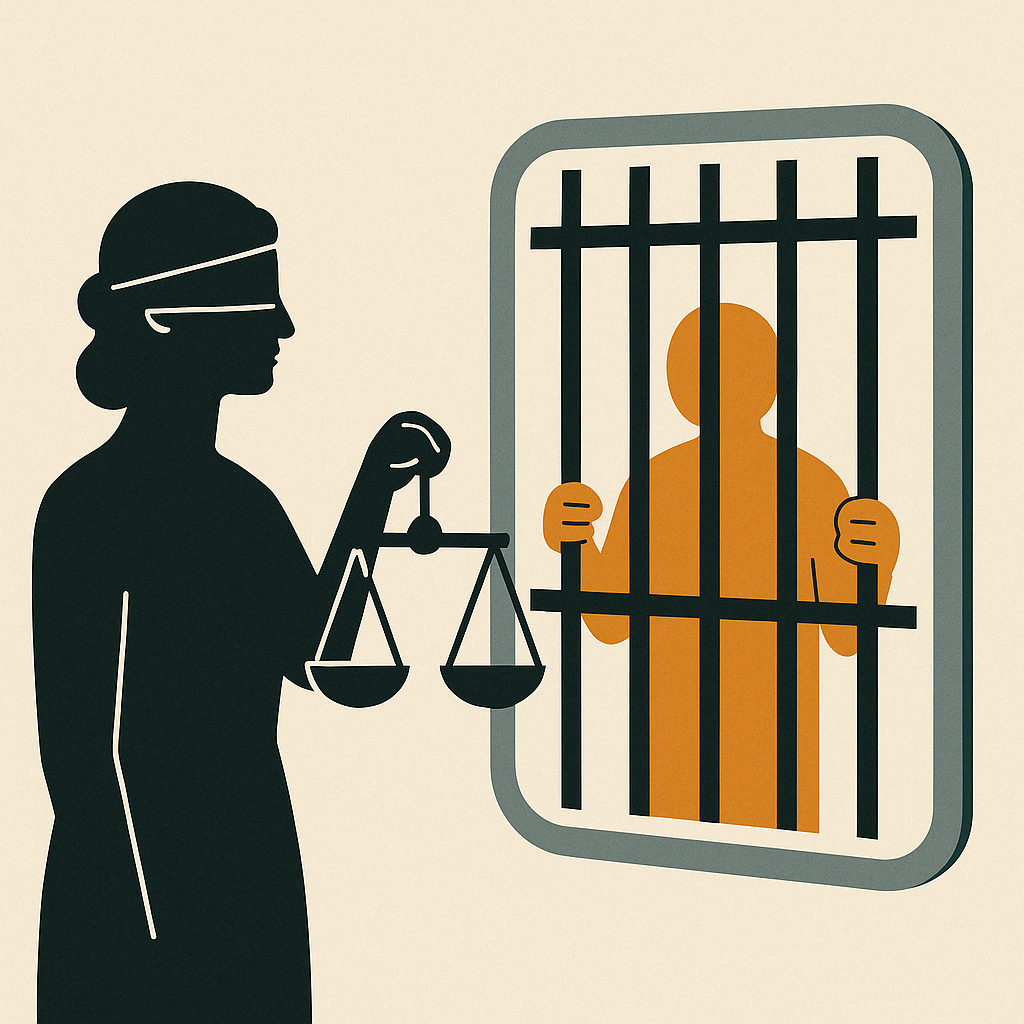
From my experience as a mediator, restorative dialogue facilitator, and someone who has worked in contexts of confinement, I hold that prison reflects the inequalities, the prejudices, and the logic of exclusion with which our society confronts conflict. In this text I share some reflections from the restorative approach I have been developing for years, alongside victims, offenders, and communities marked by pain.
What do we see when we look at prison?
People often ask me if I believe prison can be transformed. My answer is that before transforming it, we need to understand what it represents. From my personal and professional experience, I have no doubt: prison mirrors society. It is a concentrated—and often brutal—expression of how we organize ourselves, who we include and who we leave out. It reflects the way we, as a community, decide to address harm, conflict, and difference.
What happens inside the cell blocks is not a parallel universe. It is the result of structural, cultural, and political decisions that run through every layer of the social fabric. Inside, the absences, the accumulated violence, and the inequities that already existed outside become condensed.
Who ends up confined?
I have seen it in every penitentiary unit where I have worked or provided assistance, I have heard it from the mouths of hundreds of people in prison: most arrive in prison carrying a prior history of exclusion, abandonment, institutional silence. Before the offense, there is often a childhood marked by violence, structural poverty, lack of access to education, health care, and dignified housing.
Prison, in that sense, does not represent the beginning of punishment but its continuation, as if confinement were the logical culmination of a long series of social rejections. What is often punished is not just an act, but a biography. And that confronts us deeply.
If we look honestly, we will see that not everyone who commits an offense ends up in the same place. Some have access to costly defense, to supportive family environments, to opportunities to make repair. Others do not. And that is where the selectivity of the criminal justice system becomes evident, even brutal.
The law—grounded in what ethic?
For years, in every restorative encounter I have facilitated, I have asked myself what tools those of us who intervene in conflicts bring when we become part of the judicial system. I don't mean only legal knowledge, but what ethic moves us, what view we hold of the other, of harm, of the possibility of repair. Because if we are trained only to apply sanctions and not to listen to needs, then we are far from offering justice.
Restorative justice as a possibility
From Víctimas por la Paz, from Cooperativa Liberté, from every space where I work, I have been promoting restorative practices that challenge the traditional logic of punishment. We don't do this out of naivety or wishful thinking. We do it because we know there is another way to do justice. And we see it every day when we facilitate dialogues between victims and offenders, when we grant a reparative aid fund, when we manage to get someone, even afraid, to dare to listen to the other.
Taking the mirror apart
If we accept that prison reflects who we are as a society, then it is not enough to criticize the criminal justice system. We have to question the way we relate to otherness, to violence, to difference. We have to show up, body and all, to build a different story, a narrative of repair, of encounter, of integration.
Warm regards,
Diana Márquez
President of the Sociedad Argentina de Justicia Restaurativa (SAJuR)